
Meta Description: Keeping the laptop battery in very good condition is easy. Here are 11 fast, proven tweaks that you can use to get more out of your battery and keep your laptop running all day long.
Use These 11 Laptop Battery Care Tweaks for All-Day Performance
Does your laptop run out of battery before you do? You’re not alone. Millions struggle with a dying battery at the moment they need their device most. The good news? Just a few minor adjustments can be night and day.
Most people ignore laptop battery care — until it’s too late. By that point, the battery won’t hold a charge, and you’re constantly on the lookout for an outlet.
This guide contains 11 simple and effective adjustments you can implement immediately. No tech degree required. Just plain practical advice that works.
What Really Makes Your Laptop Battery Die So Quickly
Before we get into the fixes, it helps to understand why batteries drain so quickly in the first place.
Modern laptops use lithium-ion batteries. These batteries — the most common type in consumer electronics — don’t like heat, overcharging, or some of our usage habits. Over time, bad habits whittle away at the total capacity of a battery — that is, it holds less charge than it used to.
Common culprits include:
- Screen brightness set too high
- Too many apps running in the background
- Old or outdated power settings
- Battery-stressing charging habits
The good news is that all of these are easily fixable.
Adjustment #1: Lower Your Screen Brightness
Your screen is the largest individual energy drain on your laptop.
The average person runs their brightness at 100% without batting an eye. Reducing it to 50–70% can increase your battery life by 30 minutes to over an hour, depending on the laptop.
How to do it fast:
- Windows: Press
Fn + brightness keysor navigate to Settings > Display - Mac: Keyboard shortcut, or System Settings > Displays
Give this a go: Reduce your brightness to the lowest comfortable setting. Your eyes will adapt at once, and your battery will appreciate it.
Pro Tip: If your laptop has it, turn on Auto-Brightness. It adapts the screen depending on your surroundings.
Tweak #2: Change Over to a Power-Saving Mode
All laptops come with built-in power modes. It’s a setting most people never bother changing — and that’s a mistake.
Power-saving mode cuts down on background activity, slows your processor just a bit, and dims your screen automatically. This is one of the low-hanging fruits when it comes to laptop battery care.
| Power Mode | Battery Life | Performance |
|---|---|---|
| High Performance | Short | Best |
| Balanced | Medium | Good |
| Power Saver | Longest | Moderate |
| Custom | Varies | Adjusted |
How to switch modes:
- Windows 11: Click the battery icon in the taskbar > move the slider to “Battery saver”
- Mac: System Settings > Battery > check “Low Power Mode”
Power-saving mode doesn’t need to be used all the time. Use it when you’re away from a charger.
Tip #3: Close All the Apps You Aren’t Using
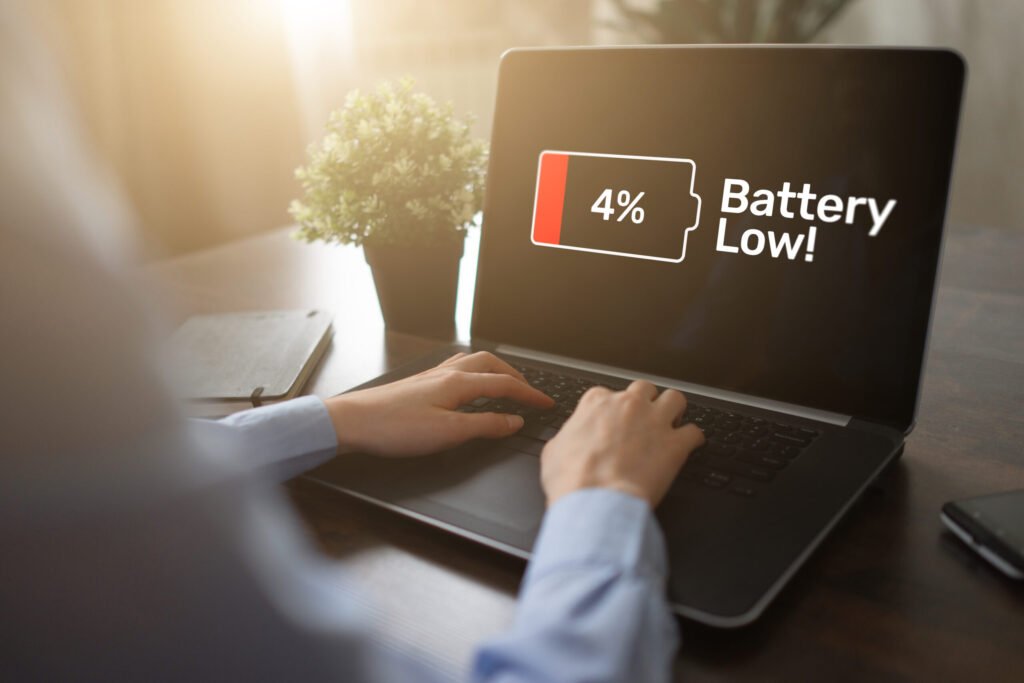
Apps running in the background drain your battery — even if you’re not actively using them.
Check your taskbar or dock. Look at how many apps are running right now that you don’t need. Music players, email clients, browser tabs, game launchers — all of them draw power.
How to close background apps easily:
- Windows: Right-click the taskbar > Task Manager > End Task on unused apps
- Mac:
Cmd + Option + Esc> Force quit what you do not need
Also, check your startup programs. These are apps that run automatically when you boot up your laptop. Turning off unneeded ones saves both battery and boot time.
- Windows: Task Manager > Startup tab > Disable apps you don’t use
- Mac: System Settings > General > Login Items > Remove extras
Tweaker #4: Disable Wi-Fi and Bluetooth When Not in Use
Wi-Fi and Bluetooth constantly scan for connections — even when you’re not using them. That search uses battery power.
If you’re working offline, disconnect from Wi-Fi. Disable Bluetooth if you’re not using wireless earbuds or a wireless mouse.
How to do it:
- Windows: Click the network icon in the taskbar > disable Wi-Fi or Bluetooth
- Mac: Click the Control Center icon > turn off Wi-Fi or Bluetooth
It is a small change, but they add up — especially during long work sessions.
Tip #5: Control Your Browser Tabs
This one surprises people.
Every open browser tab consumes RAM and CPU — which directly eats into your battery. If you’ve got 20+ tabs open (most of us do, don’t worry), you’re chewing through battery life a lot faster than you’d expect.
Smart tab habits:
- Close tabs you aren’t using
- Install a tab manager extension like OneTab or Tab Suspender
- Don’t run heavy sites like YouTube in the background
The browser you use matters too. Microsoft Edge and Safari are more battery-efficient than Google Chrome. If battery life is important to you, consider switching.
| Browser | Battery Efficiency |
|---|---|
| Safari (Mac) | Excellent |
| Microsoft Edge | Very Good |
| Firefox | Good |
| Google Chrome | Average |
Tip #6: Change Your Sleep and Screen Timeout Settings
If your laptop keeps running for minutes after you stop using it, you are just wasting the battery.
Set your screen to black out after 1–2 minutes of inactivity. Ensure your laptop goes to sleep after about 5–10 minutes. These are fast tweaks with visible results.
How to set it up:
- Windows: Settings > System > Power & Sleep > set both timers
- Mac: System Settings > Battery > slide the “Turn display off after” slider
Consider it like this — each extra minute your screen stays on for no reason is lost battery you can’t reclaim.
Tweak #7: Keep Your Laptop Cool
Heat is a laptop battery’s enemy.
Your battery degrades more quickly when it runs hot. Heat exposure, over months and years, causes permanent capacity loss in your battery. Keeping your device cool is essential for good laptop battery care.
Tips to reduce heat:
- Do not use your laptop on soft surfaces like beds or pillows — they stifle airflow
- Use a laptop stand or cooling pad to enhance ventilation
- Periodically blast compressed air to clean the vents
- Don’t leave your laptop in a hot car or direct sunlight
If your laptop is always hot, it could mean the fans are blocked or the thermal paste needs replacing. That’s where a local tech shop comes in.
Tweak #8: Don’t Charge to 100% Every Time
This is a big one — and it has people scratching their heads.
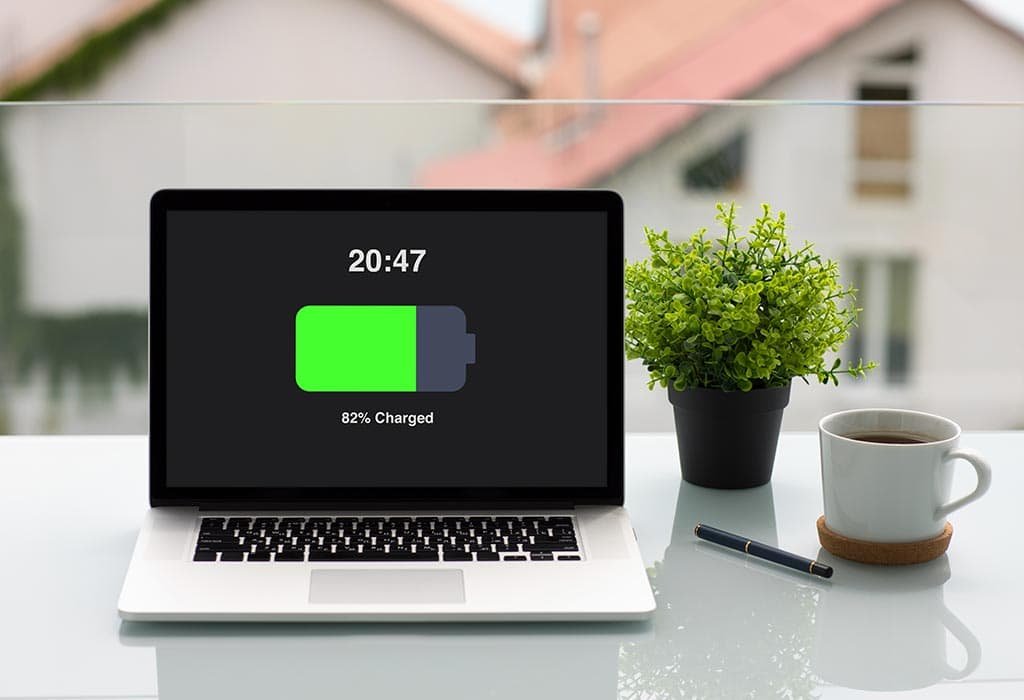
Keeping your laptop plugged in at 100% all the time is actually stressing the battery. Lithium-ion batteries like to stay in the 20–80% range. Battery lifespan shortens with repeated charging-to-full and draining-to-empty.
Healthier charging habits:
- Charge your battery up to about 80% for regular use
- Never let it drop below 20% regularly
- Once charged, unplug it — don’t let it sit at 100% for hours
Many modern laptops come with a built-in battery limit feature for exactly this reason.
- Windows (Lenovo/Dell/HP): Check your manufacturer’s companion app (Lenovo Vantage, HP Support Assistant, Dell Power Manager)
- Mac: System Settings > Battery > check “Optimized Battery Charging”
How to Apply the 20–80 Rule in Real Life
| Charge Habit | Effect on Battery Health |
|---|---|
| Always charged to 100% | Degrades capacity over time |
| Charged to 80%, unplugged | Extends long-term battery life |
| Drained regularly to 0% | Stresses battery cells |
| Kept between 20–80% | Best for battery longevity |
Tweak #9: Keep Your Drivers and Operating System Up to Date
Old software can cause your laptop to work harder than it has to — and that exhausts your battery sooner.
Driver updates, particularly for your graphics card and chipset, usually bring improved efficiency. Operating system updates do too.
How to update:
- Windows: Settings > Windows Update > Check for updates
- Mac: System Settings > General > Software Update
This process takes only a few minutes and can improve both performance and battery life. Make it a monthly habit.
Also look for updates to your graphics driver specifically:
- NVIDIA: Use GeForce Experience or Device Manager
- AMD: AMD Software: Adrenalin Edition
- Intel: Intel Driver & Support Assistant
Tweak #10: Use Dark Mode Whenever You Can
If your laptop has an OLED screen, dark mode can be a real battery saver. When OLED screens display black, they turn off individual pixels, which saves actual power.
Even on standard LCD screens, dark mode helps reduce eye strain and can lower power usage slightly.
How to enable dark mode:
- Windows: Settings > Personalization > Colors > Dark
- Mac: System Settings > Appearance > Dark
Go dark on your most-used apps too — browsers, note-taking apps, and code editors all support dark mode.
Note: Dark mode saves more battery on OLED screens. If your laptop has an LCD, the savings are smaller, but still worth it.
Tweak #11: Periodically Perform a Full Battery Calibration
Over time, your laptop battery meter may drift out of calibration. It can read 30% — then power off abruptly. That’s because the battery and the software tracking it can get out of sync.
Battery calibration resets that sync. Here’s an easy way to do it every few months:
- Fully charge your laptop to 100%
- Leave it plugged in for another 2 hours
- Unplug and use the laptop normally until it reaches 5% or lower
- Allow it to sleep naturally — do not force shut down
- Re-plug and charge to 100% uninterrupted
This process helps your laptop report a more accurate battery percentage.
Important: Don’t do this every week. Every 2–3 months is sufficient. Doing it too often can strain the battery.
How These Tweaks Work Together
No one tweak is going to double your battery life overnight. But when you combine a few of these habits, the results are real and noticeable.
Here’s a quick overview of the expected effect for each adjustment:
| Tweak | Potential Battery Improvement |
|---|---|
| Lower screen brightness | Up to +60 min |
| Use power-saving mode | Up to +45 min |
| Kill background apps | Up to +30 min |
| Turn off Wi-Fi/Bluetooth | Up to +20 min |
| Manage browser tabs | Up to +30 min |
| Optimize sleep settings | Up to +15 min |
| Keep laptop cool | Long-term health |
| Follow the 20–80% charge rule | Long-term health |
| Update drivers/OS | +10–20 min |
| Use dark mode (OLED) | Up to +20 min |
| Calibrate your battery | Accuracy improvement |
Implementing just 5–6 of these, you can easily gain yourself an extra 2–3 hours per charge.
Signs Your Battery Needs to Be Replaced (Not Simply Better Care)
Sometimes battery care isn’t enough. No tweak will fully fix a severely degraded battery.
Watch for these warning signs:
- Battery drains from 100% to 0% in under an hour
- Laptop suddenly shuts down at 20–30%
- Battery won’t charge past a certain percentage
- The laptop gets extremely hot even on simple tasks
- Windows displays a “Consider replacing your battery” warning
How to check battery health:
- Windows: Open Command Prompt > type
powercfg /batteryreport> press Enter. A detailed report will be saved to your user folder. - Mac: Hold
Option> click the Apple menu > System Information > Power > look for “Cycle Count” and “Condition”
According to Battery University, lithium-ion batteries that are consistently kept at high charge levels experience measurably faster capacity loss over time — making proper charge habits one of the most impactful long-term strategies.
If battery health drops below 80% of original capacity, replacement is worth considering.
Good Laptop Battery Care Habits for the Long Run
The tweaks in this guide work best when they become habits — not one-time fixes.
Here’s a simple routine to keep your battery in great shape:
Daily:
- Avoid keeping brightness at maximum
- Close apps and tabs you aren’t using
- Don’t leave it charged at 100% overnight
Weekly:
- Check for software/driver updates
- Make sure vents are clear and the laptop isn’t running hot
Monthly:
- Review which startup apps are enabled
- Check battery health report
Every 2–3 months:
- Run a battery calibration
Picking up small habits and doing them consistently beats out large efforts once in a while.
Frequently Asked Questions (FAQs)
Is it harmful to keep my laptop plugged in all the time?
Yes, over time it can be. Running the battery at 100% all the time stresses the cells. If you primarily use your laptop at a desk, set a charge threshold of 80% using your laptop’s power management software.
How long should a laptop battery last?
Most laptop batteries will have a lifespan of 2–4 years or around 300–500 charge cycles. With good laptop battery care, you can extend that to 5+ years.
Does closing the lid drain the battery?
It all depends on your sleep settings. If your laptop sleeps on lid close, it uses next to no power. If it stays on, it drains as normal. Confirm through your power settings that sleep is configured on lid close.
Can I use my laptop while it’s charging?
Yes, absolutely. It’s completely safe to continue working on your laptop while it’s plugged in. Just don’t place the laptop on a soft surface, because heat can build up while charging and cause stress to the battery.
What’s a battery cycle?
A full charge from 0% to 100% counts as one battery cycle. A charge from 50% to 100% counts as half a cycle. Most laptop batteries are rated for 300–500 full cycles before significant degradation.
Should I remove the battery when using AC power at a desk?
Most modern laptops have non-removable batteries. If yours does, this used to be suggested — but most modern laptops now handle charging automatically, so it’s generally not necessary.
Does dark mode really save battery?
Yes, on OLED screens — significantly. The savings on LCD screens are smaller, but still present. It’s worth enabling for the eye strain benefits alone.
Wrapping It All Up
Your laptop battery doesn’t have to be a constant annoyance.
With these 11 laptop battery care tweaks, you can squeeze extra hours out of every charge — and keep your battery healthier in the long run. Many of these adjustments can be made in under five minutes. Some are just habit changes that cost nothing at all.
Start with the simplest wins: lower your brightness, switch to power-saving mode, and stop leaving your laptop charging at 100% overnight. Then work your way through the rest.
Over time, these small changes add up to a laptop that stays reliable longer — and a workday where you’re not searching for a power outlet.
Take care of your battery, and it will take care of you.